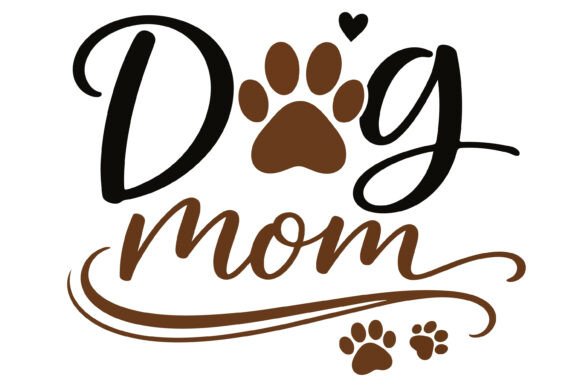
Dog Mom SVG Vector Cut File
First Impressions: Sweet, Simple, and Stitch-Ready
Opening the Dog Mom SVG Vector Cut File, I immediately noticed its clean silhouette and warm, approachable energy — not overly cutesy, not too minimal. It’s a confident, centered composition: a stylized dog head with “Dog Mom” arched gently above it in a friendly sans-serif. No extra flourishes, no distracting shadows or gradients — just bold, open shapes that breathe well on fabric. That’s promising. As an embroidery designer who’s stitched hundreds of “mom life” motifs for tote bags, baby onesies, and boutique aprons, I know this kind of restraint is rare — and valuable. It signals intentionality, not just clipart recycling.
Where It Shines: Real Projects, Real Customers
I tested the Dog Mom SVG Vector Cut File as the centerpiece for a custom embroidered canvas tote bag — the kind sold at local craft fairs and Etsy shops targeting pet-loving moms. Stitched in soft ecru thread on charcoal canvas, the design held up beautifully: clear lettering, balanced negative space around the dog outline, and proportions that read instantly from three feet away. It also translated well to a sweatshirt embroidery project — scaled slightly larger, with a light tear-away stabilizer underneath — where the clean lines prevented puckering on the knit fabric.
It’s equally effective on smaller items: I digitized it (using my own embroidery software) for a 3.5-inch hoop on a baby onesie. The simplicity meant no tiny satin-stitch eyes to snag or fill-stitch areas that bunched. For patches? Yes — the vector foundation made resizing for iron-on or sew-on backing effortless. And for holiday embroidery — think linen tea towels or pillow covers for a “dog mom” gift bundle — the design feels personal without being overly literal. Customers don’t need to squint or decode it. They *get* it — and smile.
What This Means for Your Craft Business
If you’re an Etsy seller or small shop owner curating handmade product lines, the Dog Mom SVG Vector Cut File works as quiet branding — not shouting, but resonating. It supports brand consistency across products (tote + towel + patch = cohesive collection), boosts giftability (it’s sentimental but not saccharine), and builds trust: buyers recognize thoughtful design when they see it. That translates directly to higher perceived value — especially next to generic “paw print + text” combos flooding digital marketplaces.
Where to Pause — Not Every Fabric or Fit Is Equal
This isn’t a one-size-fits-all embroidery file — and that’s okay. Its strength is clarity, not complexity. So if you’re planning to stitch it on thin jersey or highly stretchy fabric, use cutaway stabilizer and reduce stitch density slightly in the lettering to avoid stiffness or shadowing. On dark fabric, test thread color contrast first — the original vector has no built-in color guidance, so choose a thread that lifts the shape without washing it out (e.g., creamy white or soft sage over navy).
Curved surfaces like caps or structured hats require careful hooping and possibly slight manual adjustment of the arch — the vector layout assumes flat application. And while the design is fully editable, don’t push the “Dog Mom” text below 0.3 inches tall in final embroidery size — fine details like thin serifs or tight curves won’t digitize cleanly at tiny scales. Likewise, dense decorative accents (like adding paw prints manually around it) can overwhelm the core motif unless balanced intentionally.
Designer Notes You’ll Actually Use
- Always test on scrap fabric first — especially with textured weaves like burlap or terry cloth, where fill stitches can sink or blur.
- Review stitch density in your embroidery software before sending to machine — the vector gives you control, but it doesn’t auto-optimize for thread tension or fabric drape.
- Confirm hoop size compatibility — the file includes EPS, SVG, PNG, JPEG, and PDF, but none specify maximum dimensions; scale thoughtfully for your smallest hoop.
- Inspect corners and curves in black-and-white mockups — what looks smooth on screen may digitize with jagged edges if anchor points aren’t optimized for stitch paths.
- Check licensing before selling finished items — the listing says “Ready to use,” but commercial embroidery rights vary; verify whether resale of physical products (not just digital files) is permitted.
- Compare light/dark background mockups — this design relies on shape and contrast, not color, so it’s flexible — but only if your thread choice honors that balance.
Final Thought: A Thoughtful Tool, Not Just Another Graphic
The Dog Mom SVG Vector Cut File isn’t flashy — and that’s why it’s useful. In a landscape full of over-rendered illustrations and cluttered graphics, it offers breathing room, scalability, and quiet confidence. It fits naturally into apparel decoration, personalized gifts, and small-batch merchandise without demanding attention — it earns it. Whether you’re prepping for a craft fair, building an Etsy shop’s signature style, or designing a limited-run nursery collection, this is the kind of Illustrations asset that supports your voice instead of competing with it. As a working embroidery designer, I keep files like this in my “go-to” folder — not because they’re perfect, but because they’re honest, adaptable, and ready to become something real.