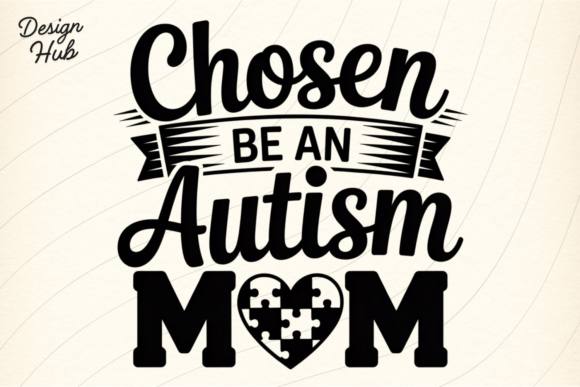
Chosen by Autism Mom SVG Shirt
A Designer’s First Look: Bold, Warm, and Immediately Recognizable
When I opened Chosen by Autism Mom SVG Shirt, my first thought wasn’t about file format or licensing—it was about resonance. This isn’t a trendy phrase slapped onto a template. It’s centered, grounded, and built with intentional weight in the typography. The bold, clean sans-serif lettering carries quiet confidence—not shouting, but standing firm. There’s no clipart clutter, no distracting icons, no forced whimsy. Just clear, heartfelt language shaped for legibility and emotional impact. That simplicity is its strength—and its biggest clue about where it belongs.
Real Project Test: Embroidering a Linen Tote for a Local Autism Support Group
Last week, I digitized and stitched Chosen by Autism Mom SVG Shirt onto a natural linen tote for a boutique pop-up event hosted by a local autism advocacy group. We chose medium-weight linen because it breathes, wears well, and feels handmade—not mass-produced. I used a 4” x 4” hoop, medium tear-away stabilizer, and matte cotton thread in charcoal gray (for contrast on light fabric) and soft heather gray (for subtle depth). The result? Crisp edges, even satin-stitched letters, and zero puckering—even across the horizontal “o” and tight curves of “Mom.” Customers paused, smiled, sometimes touched the stitching gently. One mom said, “That’s exactly how I feel—seen, not explained.” That moment confirmed what the design does best: it invites recognition before explanation.
Where It Shines—and Where It Needs Thoughtful Handling
Chosen by Autism Mom SVG Shirt works beautifully on structured, stable surfaces: sweatshirt fronts, baby onesie chest placements, embroidered patches for backpacks, aprons for therapy clinic staff, and pillow covers for sensory-friendly nurseries. Its generous letter spacing and moderate stroke width translate cleanly into fill stitch and satin stitch without overloading density. As a tote bag design or sweatshirt embroidery piece, it reads clearly from three feet away—critical for boutique merchandise or craft fair displays.
But let’s be direct: this isn’t a one-size-fits-all machine embroidery design. On ultra-thin baby rib knit or highly textured terry cloth, I’d add cut-away stabilizer underneath *and* topping to prevent shadowing or thread pull-through. On dark fabric, test thread color contrast early—some lighter grays vanish unless you switch to cream or pale gold. And avoid placing it on curved cap fronts without re-digitizing; the original layout assumes a flat plane. Tiny corners (like the inner curve of “C” or “a”) hold up well—but only if your machine’s tension is dialed in and your needle is fresh.
What It Adds to Your Handmade Product—Beyond the Stitch
This design elevates perceived value instantly. Because it’s emotionally precise—not generic—it signals care in curation. When customers see Chosen by Autism Mom SVG Shirt on an Etsy listing or shop shelf, they don’t just register “t-shirt design.” They register intention. That builds trust faster than any product description. For craft business owners, it strengthens brand consistency when paired with thoughtful packaging—a small ribbon tag reading “Designed with love for autism families,” for example. As a personalized gift, it avoids cliché while still feeling celebratory. And as a digital embroidery file, its clean vector foundation means it scales cleanly for both a 3” patch and a 7” front-panel sweatshirt layout—no pixelation, no jagged edges.
Practical Notes Every Embroidery Designer Should Run Through
- Always test on scrap fabric first—especially if pairing with stretchy knits or delicate weaves.
- Review stitch density before sending to your machine. Overly dense fills on lightweight fabric can stiffen the hand uncomfortably.
- Confirm hoop size compatibility. While the design fits comfortably in a 5” round or 4”x4”, double-check your frame clearance if using specialty hoops.
- Inspect small details at 200% zoom in your embroidery software—look for stray nodes or overlapping paths that could cause jump stitches.
- Test black-and-white mockups to assess readability on light vs. dark backgrounds before finalizing thread colors.
- Use proper stabilizer: medium tear-away for stable cottons, cut-away for knits, and topping for napped or fuzzy fabrics.
- Verify licensing before selling finished items or bundling as part of a commercial embroidery project. Not all graphics allow resale of physical products without extended rights.
Final Thought: A Quiet Anchor in a Noisy Market
In a sea of overdesigned, trend-chasing T-Shirt Designs, Chosen by Autism Mom SVG Shirt stands out by doing less—more meaningfully. It doesn’t need glitter, hearts, or rainbows to communicate love and resilience. That restraint makes it versatile across seasons, age groups, and product types: equally fitting on a holiday embroidery gift for a new autism mom, a nurse’s embroidered scrubs pocket, or a boutique’s limited-run tea towel collection. For Etsy sellers, small shop product developers, and creative entrepreneurs, it’s not just another digital embroidery file. It’s a conversation starter. A quiet affirmation. A design that earns its place—not because it’s flashy, but because it’s true.